

baby essentials checklist

A baby essentials checklist for a newborn

A baby essentials checklist is the short list of what a newborn needs at home: clothes in more than one size, a safe place to sleep, a changing setup, a way to feed, and a safe way home if you drive. You do not need every product in the shop before the birth. Add a price when it helps. This page explains the choices. A list your family can reserve is a separate step.

100% free
Guests reserve without an account
GDPR compliant
Download the Wish Hero app from the Google Play StoreDownload the Wish Hero app from the App Store

What a newborn needs in the first weeks

The must-haves are a sleep space, something to wear, a way to change and feed the baby, and transport if you will leave the house. The NHS newborn essentials list is a clear public starting point: you do not need everything on day one, and not everything has to be new. Where a local rule or a local product differs, that is called out below.

Use the quantities as a first buy, then adjust. The NHS suggests at least six all-in-one sleepsuits, four to six bodysuits, two cardigans, a few packs of newborn nappies, cotton wool or unscented wipes, a changing mat, barrier cream, at least four fitted sheets and two sleeping bags. A pharmacy or baby shop sells the equivalents. Your midwife or hospital may add something for your own birth, so follow that list for the hospital bag.

When relatives want to reserve items from this checklist, put them on a baby essentials wishlist . Product ideas you can click through sit under baby inspiration .
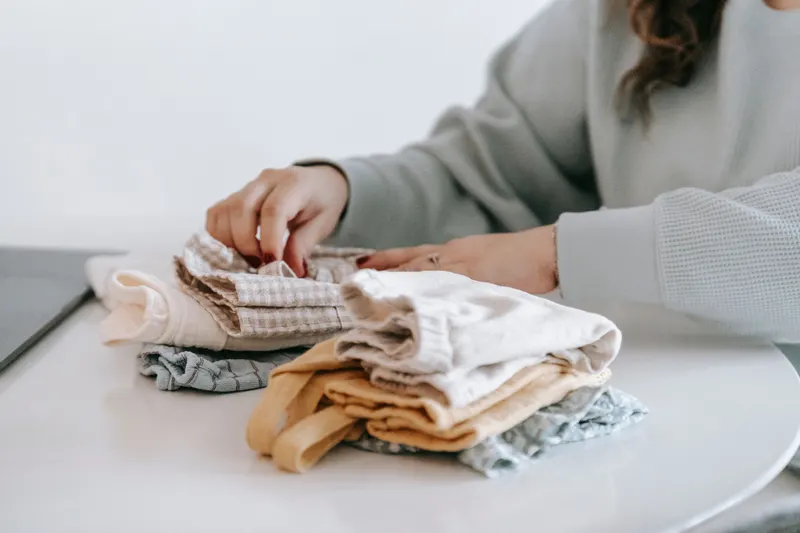

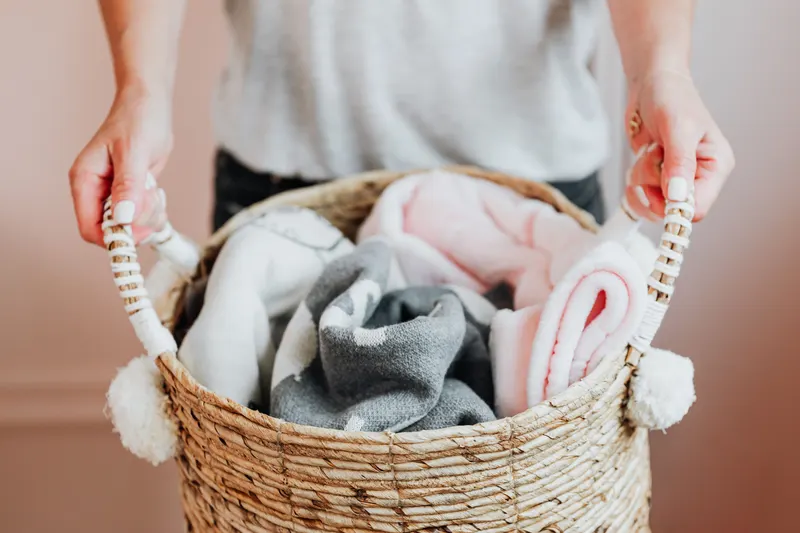
Folded baby clothes and muslin cloths laid out as a starter kit
Parents sorting newborn clothes in several sizes on a bed

Clothing sizes: a few small, more of the next

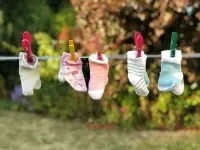
In any shop, baby clothes are labelled by body length in centimetres: 50, 56, 62, 68, 74, then 80 and 86. Packs are often marked 50/56 or 62/68. A checklist that starts at 62 leaves out the sizes sold for newborns. Buy a small number of bodysuits and sleepsuits in 50 and 56, and more in the next sizes.

Some babies wear 50 only for a short time. Some are born into 56 or 62. You cannot know which before the birth, so the list should contain the small sizes and the ones after them. Add whatever is still missing once you have met the baby. The NHS counts above are a sensible first stack, not a rule that every child will wear every piece.

Match the fabric to the month. The NHS includes a snowsuit if the weather is cold, a sun hat in summer, and a wool or cotton hat in colder months. A warm pramsuit in July, or a pile of vests with no layer for January, just sits in the cupboard. Cardigans in cotton or wool are easier to wash and layer than a large set of outfits in one size.

  • A few bodies and sleepsuits in 50 and 56, or one 50/56 pack
  • More bodies and sleepsuits in 62, 68 and 74
  • Two cardigans, plus a hat or pramsuit for the season
  • Socks or booties, and scratch mitts only if you want them

Safe sleep and a simple changing setup

For sleep, use the BZgA safe-sleep advice from the Federal Centre for Health Education. In short: the baby sleeps on their back, in their own bed in the parents' room during the first year, on a firm, flat mattress. Prefer a sleeping bag to a loose duvet. Leave out pillows, cot bumpers, nests, sheepskins, hot-water bottles and heating pads. They advise keeping the bedroom at 18 degrees Celsius and smoke-free, and leaving the baby's hat off for sleep.

The NHS adds a practical shopping list around that: a crib, carrycot or Moses basket, a mattress that fits with no gaps, a waterproof cover, at least four fitted sheets, and two sleeping bags. It also says to buy the cot mattress new. Measure the mattress against the cot you will actually use. A soft second-hand mattress is the wrong place to save money.

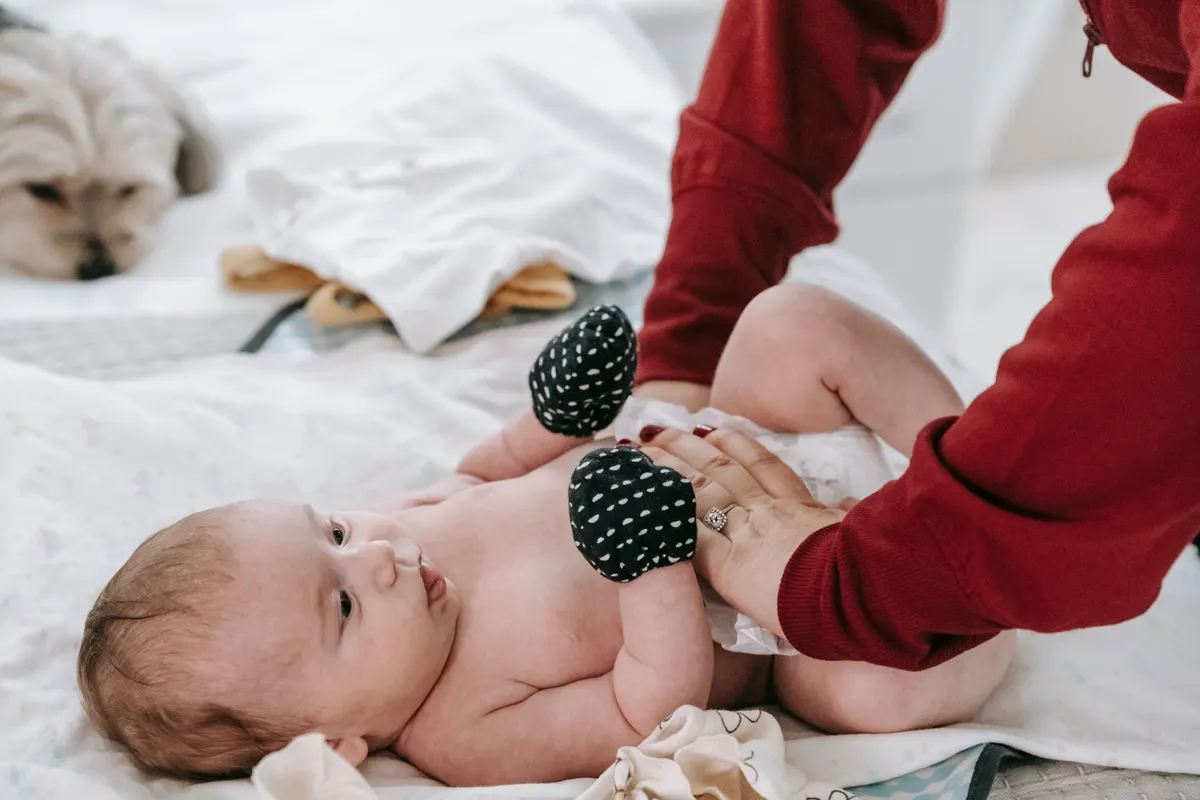
Changing needs less furniture than the catalogues show. A mat you can wipe, nappies, cotton wool or unscented wipes, barrier cream and a stack of muslins cover the first weeks. A themed changing unit can wait. You will know after a fortnight whether you want one.

A parent changing a baby on a simple wipeable mat

Feeding changes the list

Buy for the feeding method you are planning, and keep the other kit small until you know. The NHS breastfeeding list includes nursing bras, ideally fitted around 36 to 38 weeks, breast pads, nipple cream and muslin squares. A breast pump is on that list. Many people wait and buy one only if they want it.

For formula, the same NHS page lists bottles with teats and caps, a steriliser, brushes, formula, and muslins. If you expect to combine breast and bottle, you do not need a full second set of equipment before the birth. Add the missing pieces in the first week, when you can tell what you use.

Put the brand of teat or bottle on a wishlist wish if it has to match. A well-meant second brand is how a cupboard fills with parts that do not fit.

A parent walking with a pram on a quiet street

The trip home, second-hand, and money

If the baby will travel by car, use an approved infant carrier fitted facing backwards for the country where you drive. ADAC states that a child under 15 months must not face forward in a seat approved to UN Regulation 129, and a child under 9 kg must not face forward in a seat approved to UN Regulation 44. On a front passenger seat, the front airbag has to be switched off. Not every carrier fits every car, so choose the model against your car before anyone buys it.

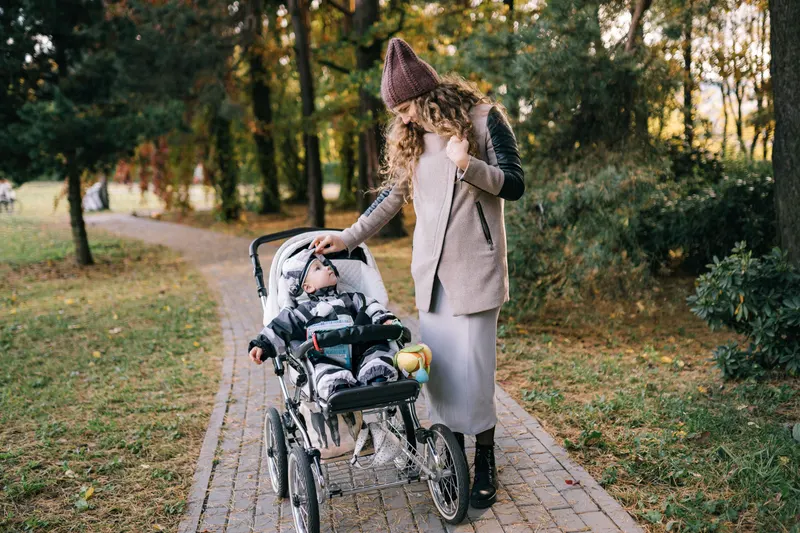
The NHS says the car seat should be bought new, like the cot mattress. Clothes, toys and much of the other kit can be second-hand. If you will walk, the NHS includes a pushchair with a seat that lies flat. A sling is optional. The NHS says to read the safety advice before you use one.

The large sums are usually the sleep setup, the car seat and, if you buy one, the pram. Clothes can stay modest because the sizes change. There is no single correct budget. Write a real price from any shop on each wish rather than a round number you hope sounds right.

What can wait until after the birth

Before the birth, aim for the sleep space, a small clothing stack across several sizes, nappies, the feeding basics you have decided on, and a car seat if you will drive home. The hospital bag is narrower. Use the list from your hospital or birth centre for that, and do not treat this page as a substitute.

After the birth you can add the size the baby is actually wearing, more nappies in the size that fits, a pump if you want one, and a carrier once you have read the safety notes. A wipe warmer, a second play mat, themed furniture and a full wardrobe of one newborn size are not on the NHS essentials list. Buy them later if you still want them.

Season and feeding method move more of the list than any generic kit does. A July baby and a January baby do not need the same outer layer. A breastfeeding household and a formula household do not need the same kitchen shelf.

If someone asks what to buy

Muslin cloths, a sleeping bag in a stated size, meals for the parents, and a contribution towards a car seat or mattress you have already chosen are gifts that get used. Ask before a large item, and name the model.

A party has its own baby shower registry , which can hold small gifts and larger group wishes. Keepsakes for a Taufe belong on a baptism wishlist . This checklist is the buying guide, not those invitations.

Muslin cloths and a baby blanket arranged as simple gifts

Questions about baby essentials checklist

Accounts, shops, and who can see a reservation.

A safe sleep place, clothes in more than one size, nappies and a changing setup, feeding supplies for breast or formula, and an approved car seat if the baby will travel by car. The NHS newborn list is a useful quantity check. any shop and the car-seat rules where you drive still apply.
The NHS suggests at least six sleepsuits, four to six bodysuits, two cardigans, a few packs of newborn nappies, at least four fitted sheets and two sleeping bags. In spread the clothes across 50, 56 and the next sizes rather than buying the whole count in one size. Adjust after the birth.
The sleep space, a small clothing stack in several sizes, nappies, the feeding basics you have chosen, and a rear-facing infant carrier if you will drive home. Pack the hospital bag from your own hospital's list.
Extra clothes in the size the baby actually wears, more nappies once you know the fit, a breast pump if you want one, a sling after you have read the safety advice, and anything decorative. A wipe warmer and a second play mat are easy to skip.
The NHS says newborn things do not all have to be new, with two exceptions: the cot mattress and the car seat. Clothes, muslins and many larger items are routinely second-hand. Buy the mattress and the car seat new.
The BZgA advice is: on the back, in their own bed in the parents' room for the first year, on a firm flat mattress, in a sleeping bag, without a pillow, bumper, nest or sheepskin, in a smoke-free bedroom at 18 degrees Celsius. Read the current page before you choose a bed. This checklist is not a medical consultation.
If the baby travels by car, ADAC explains that an infant carrier is fitted facing backwards. Under UN Regulation 129 a child under 15 months must not face forward. Under UN Regulation 44 that applies under 9 kg. The front airbag must be off if the seat is in the passenger seat. Pick a model that fits your car. There is no requirement to own a car.
Breastfeeding points to bras, pads and muslins. Formula points to bottles, a steriliser and formula. A mix can start smaller and grow in week one. Winter needs a warm layer. Summer needs a sun hat, not a pramsuit. The BZgA also advises against a hat for sleep indoors.

Still have a question?

We are happy to help. Send us a message, or tell us how Wish Hero can get better.